
Group tours or self guided itineraries for your next ADV trip
Last updated: January 2026
TLDR: I’ve ridden motorcycles across India for eight years. Here’s what I know. Spiti is the best ride in the Himalayas, raw and remote. Ladakh is the classic bucket list. South India is the easy win in winter. A good operator removes the chaos and lets you ride. I run a 14-day Spiti Valley tour every September, £3,950, small group, proper support. See the route and dates.

I’ve spent the last decade riding India on two wheels. First on a bicycle, then on a Royal Enfield Thunderbird, then on a Himalayan.
I’ve ridden solo, self-supported and with groups. I’ve crossed Tanglang La in a snowstorm, rode through flooded roads in Spiti, and eaten more roadside dal than I can count.
Now I guide small-group motorcycle tours through the Indian Himalayas. This review covers the routes I know, the operators I’ve watched, and the decisions that matter before you book anything.
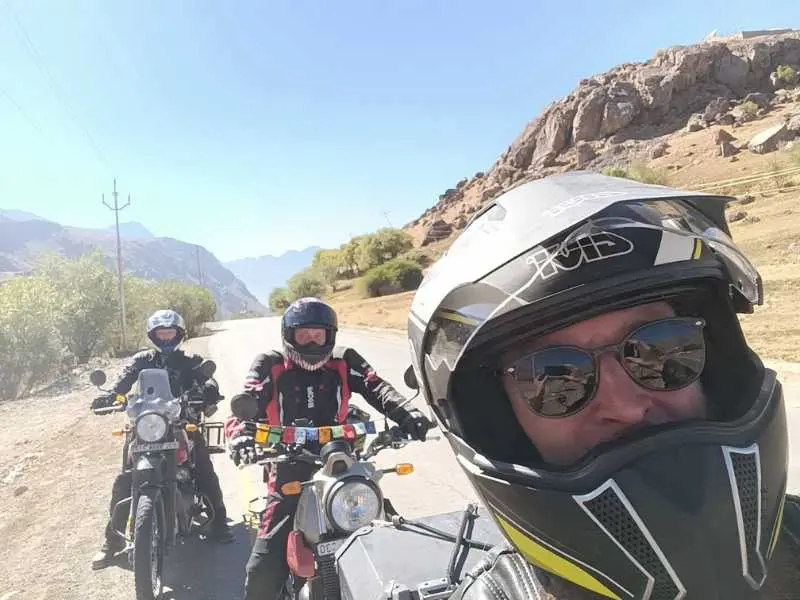
Why ride India with a guide?
India isn’t hard because of distance. It’s hard because things change without warning.
A perfect highway ends at a pile of rubble. Fuel stations close for festivals you’ve never heard of. Altitude sneaks up on you at 4,000 metres when you haven’t slept properly for two nights.
A good guided tour gives you a route that works in the real world, a support vehicle and crew, and local knowledge for fuel, food, stays and permits. When altitude, weather or your bike goes wrong, someone helps you fix it.
You ride more. You stress less. That’s it.

The best motorcycle tours in India by region
North India: the Himalayas
1) The Ladakh Loop (Leh, Nubra, Pangong)
The ride most people have heard of. High passes, lunar valleys, turquoise lakes, and monasteries that look like they grew out of the rock.
Route: Manali to Leh to Nubra Valley to Pangong Lake and back. Passes include Khardung La at 5,359 metres.
Best time: June to September. That’s the practical window. Outside it, roads close.
Terrain: tarmac, dirt, gravel, mountain twisties. Duration: 11-14 days. Price: from USD 3,500 including a Himalayan 450.
Ladakh is where most riders start. The infrastructure is better than Spiti, the roads are (slightly) less terrifying, and you get the iconic photos.
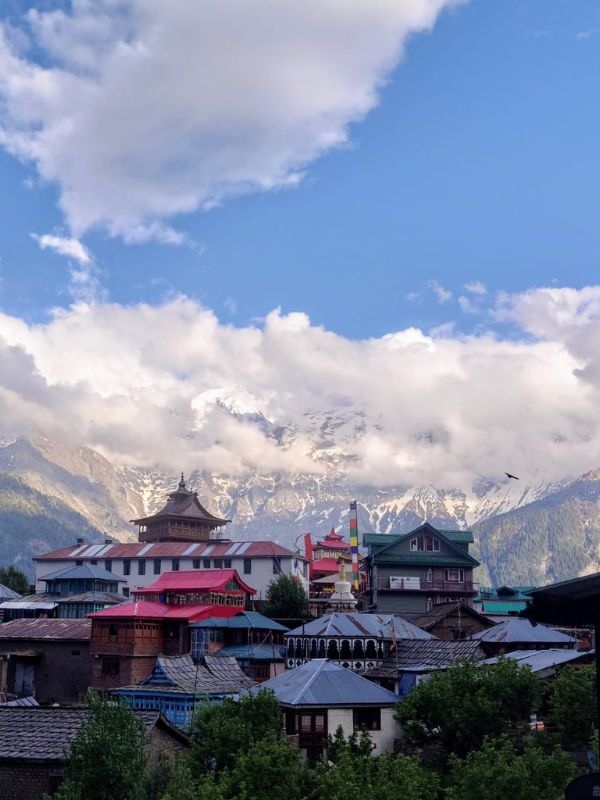
2) Spiti Valley Circuit (aka Little Tibet)
Spiti is where riders go when Ladakh feels a bit too famous.
Route: Shimla to Kalpa to Kaza to Tabo to Manali. Remote villages, dramatic cliffs, ancient monasteries.
Best time: May to October. Terrain: tarmac, dirt, gravel, mountain twisties. Duration: 11-14 days. Price: from USD 3,500 including a Himalayan 450.
The riding is harder than Ladakh. The roads are narrower, the exposure is greater, and there’s less backup if things go wrong. But the riding is raw in a way Ladakh isn’t. If you’ve ridden India before and want something that pushes you, this is it.
I run a guided Spiti Valley tour every September. 14 days, 1,900+ km, small group, proper support. See the route and book here.

3) Trans Himalaya: 24-day expedition
The hardcore option. This route covers both the Spiti Valley and an extended Ladakh Loop, crossing every major valley in a figure-eight.
Route: Shimla to Kaza to Jispa to Leh to Hunder to Pangong Tso to Dharamshala. 24 days of riding.
Best time: September. Price: from USD 5,590 including a Himalayan 450.
This is for riders who want the full send. Three weeks in the saddle, multiple high passes, and the kind of fatigue that makes you question your life choices by week two. Vintage Rides offers this as their “Himalayan Expedition” route.
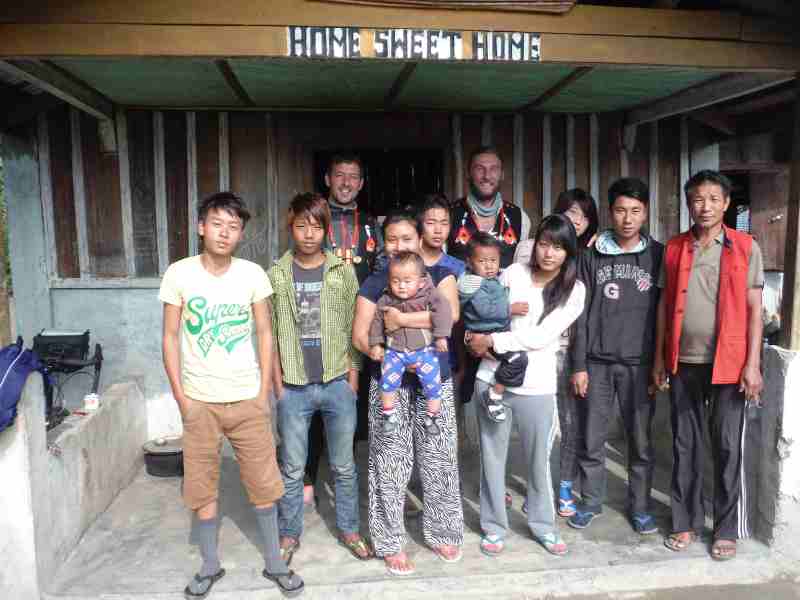
Northeast India
The North-East Explorer
Less tourist trail. More green. More culture per mile.
Route: Guwahati to Tawang to Ziro to Shillong. Tribal cultures, forests, tea estates and winding roads.
Best time: March to May, September to November. Duration: 11-14 days. Price: from USD 3,500 including a Himalayan 450.
Nomadic Knights was the first operator to offer a Seven Sisters tour through Assam, Arunachal Pradesh, Nagaland and the rest. Their “India’s Lost World” route was the original in this region, last offered in 2023.
Permit note for Arunachal Pradesh: eILP is for Indian citizens. Foreign nationals need to apply for PAP/RAP. If a tour operator is vague about permits, that’s a red flag.
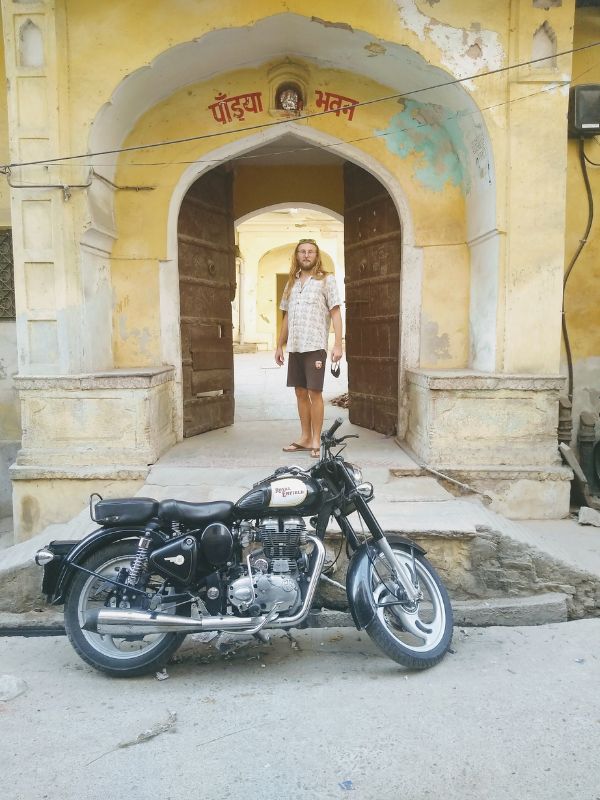
Rajasthan
The Royal Rajasthan Ride
The easiest big India ride to love. Warm winter days, huge culture hit, easy roads compared to the Himalayas.
Route: Jaipur to Jodhpur to Jaisalmer to Udaipur to Pushkar. Palaces, desert dunes, and bazaars.
Best time: October to March. Terrain: tarmac and blacktop highway. Duration: 11-14 days. Price: from USD 2,500 including a Bullet 350.
Rajasthan works for first-time India riders. The roads are manageable, the scenery is cinematic, and it’s beginner-friendly enough that you won’t wreck your bike or your marriage in the first week.

South India
Kerala to Goa (smooth tarmac, pure pleasure)
Route: Kerala to Ooty to Jog Falls to Gokarna to Goa.
Best time: November (October to March for the full window). Duration: 11-14 days. Price: from USD 4,500 including a Bullet 350.
If you want a winter ride that feels like a film, this is the template. Green hills, spice plantations, waterfalls, and Goa at the end. I live in Goa. This coast is my backyard.
Kerala and Tamil Nadu
Route: Kochi to Munnar to Thekkady to Alleppey to Varkala. Backwaters, tea plantations, tropical forests.
Best time: November to February. Duration: 11-14 days. Price: from USD 4,500 including a Bullet 350.

How to choose the right motorcycle tour in India
I’ve seen riders book the wrong tour. It’s not fun to watch. Folks who’ve never ridden gravel book a Spiti expedition and spends two weeks scared.
Experienced ADV rider who wanted raw adventure books a tarmac cruise and spends two weeks bored. Keen traveller picks the cheapest operator and discovers “support vehicle” means a mate in a hatchback with no tools.
Here’s how to avoid that.
Step 1: Match the tour to your riding level. Beginner-friendly: Rajasthan, Kerala, Goa. Intermediate: most Ladakh loops. Advanced: Spiti, remote passes, mixed surfaces. Be honest with yourself. There’s no shame in starting easy.
Step 2: Check what “support” actually means. A proper guided tour includes a backup vehicle for luggage, mechanic support, a route leader plus a sweep rider, and an altitude protocol for high routes. If the operator doesn’t mention these on their website, ask directly. If they’re vague, book elsewhere.
Step 3: Understand altitude. Altitude illness is real. Headache, nausea, exhaustion, dizziness, sleep problems. Gradual ascent and acclimatisation days are the standard medical advice. Any Himalayan tour that puts you above 4,000 metres on day two is cutting corners on your safety.
Step 4: Check the guide’s credentials. Has the guide actually ridden the route? How many times? Do they live in India or fly in twice a year? The difference between a guide who knows the roads and one who follows a GPS track is the difference between a good trip and a stressful one.

Motorcycle tour operators in India (2026)
I’ve compared 15 operators with published 2026 dates. This table shows who runs what, when, and at what price.
| Operator | Best for | Example tour | Next departures | Price |
|---|---|---|---|---|
| Really Big Bike Ride | Small-group Himalayan riding, proper support | The Great Spiti Valley Motorcycle Adventure | 1-15 September 2026 (14 days) | £3,950 |
| Simon and Lisa Thomas / 2 Ride The World | All-tarmac South India in peak season | Kerala to Goa Tour (12 nights) | 15-27 November 2026 | Tour page |
| Shackleton | Advanced riders, skills upgrade | 1,000 mile route, 12,000m ascent | September 2026 | $13k Himalayan Challenge |
| Nomadic Knights | Premium logistics, strong brand | Grand Canyon India (Western Ghats) | 31 Jan – 14 Feb 2026 | Tour page |
| Royal Enfield Marquee Rides | Official RE Tour of Ladakh | Moto Himalaya Ladakh (10 days, includes Himalayan 450) | Jul, Sep 2026 | Official page |
| AB Original Indian Motorcycle Tours | All-India itineraries, clear departures | Eastern Himalaya (Sikkim / Darjeeling) | Mar-Oct 2026 | Departures |
| Dream Riders Group | Group rides across India and beyond | Spiti, Ladakh and Bhutan | Throughout 2026 | Calendar |
| Classic Bike India | Expedition-style journeys | Multi-country overland and Himalaya routes | 2026 schedule varies | Dates |
| Vintage Rides | Extended Himalayan expeditions | 24-day Himalayan Expedition | September 2026 | From $5,590 |
| Legendary Moto Rides | Ladakh-heavy, clear pricing | The Grand Ladakh Ride | May-Sep 2026 | On request |
I run The Great Spiti Valley Motorcycle Adventure every September. 14 days, £3,950, 10 riders max. See the full route and book.
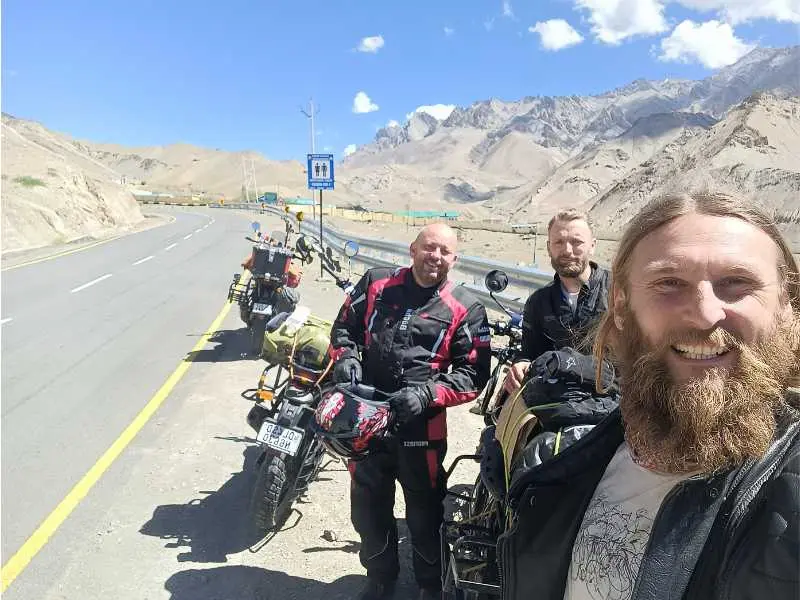
What to expect on a guided motorcycle tour in India
Bikes: Most operators use Royal Enfields. The Himalayan 450 is the standard adventure bike for mountain routes. The Bullet 350 handles tarmac tours. Both are simple, reliable, and every mechanic in India knows them.
Support vehicles: Your luggage, spare parts, tools and first aid travel in a backup vehicle. This is non-negotiable for serious mountain routes.
Accommodation: Ranges from basic guesthouses in remote Himalayas to comfortable hotels in Rajasthan and South India. In Spiti and Ladakh, expect simple. Clean beds, hot food, cold nights.
Food: Regional and real. Thalis in Rajasthan, fish curry in Kerala, momos in Ladakh, butter tea at altitude. Most tours include breakfast. Mine include all meals and most drinks.
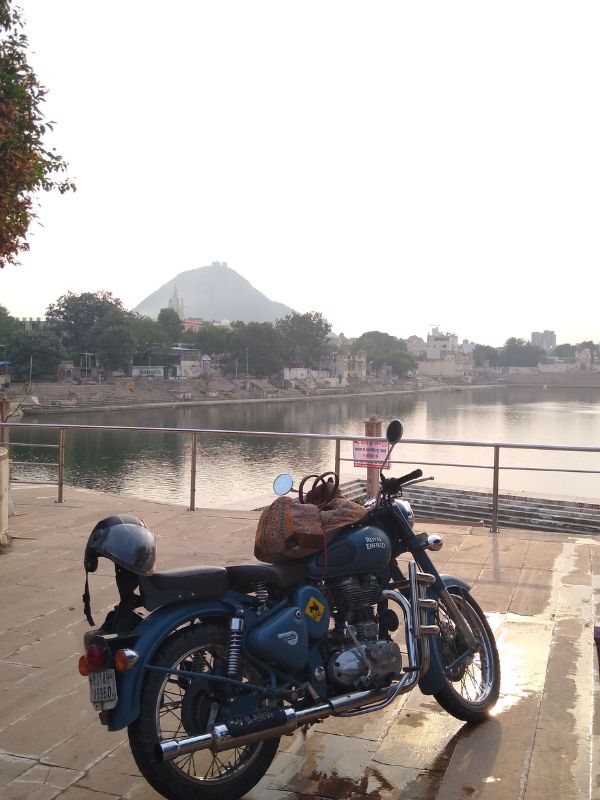
Should you book a guided tour or go solo?
If it’s your first time in India, get a guide. The logistical overhead of permits, fuel planning, altitude management and navigation on roads that change weekly is substantial. A guide handles all of it.
If you’ve ridden India before and know the basics, solo is viable for tarmac routes like Rajasthan and South India. For the Himalayas, even experienced riders benefit from support.
My view: I rode India solo for years before I started guiding. The guided version is better. You ride more, see more, and come home with better stories because you weren’t spending half your energy figuring out where to sleep.

FAQs about guided motorcycle tours in India
What’s the best time for a motorcycle tour in India?
October to March for most of the country. June to September for the high Himalayas. The mountain window is short and the weather is unpredictable. Royal Enfield runs their Ladakh batches in July and September for good reason.
Do I need permits for Ladakh?
Yes, for many routes. Use the official Leh district permit system. Your tour operator should handle this.
Do I need permits for Arunachal Pradesh?
Yes. eILP is for Indian citizens only. Foreign nationals are directed toward PAP/RAP. If an operator is vague about this, ask harder.
What bikes are provided?
Royal Enfields dominate. Most mountain tours now offer the Himalayan 450. Tarmac tours often use the Bullet 350 or Classic 350.
Is Spiti harder than Ladakh?
Often, yes. Spiti roads are rougher, narrower and more exposed. It’s a proper ride. I wouldn’t recommend it as your first Himalayan tour.
What are the symptoms of altitude sickness?
Headache, nausea, tiredness, dizziness, difficulty sleeping. These are common early signs above 3,500 metres.
Can beginners do a motorcycle tour in India?
Yes. Start with Rajasthan or South India. Save the high passes for when you’ve got some miles under your belt.
How many days should I plan?
10-14 days is the sweet spot if you’re flying in. It gives room for rest days and weather delays.
Are guided tours worth the money?
In the Himalayas, yes. It’s insurance against chaos. On tarmac routes, it depends on your comfort with India.
How do I book a tour with you?
Start with The Great Spiti Valley Motorcycle Adventure tour page. Message me from there.