
An honest Spiti vs Ladakh motorcycle tour comparison, from someone who runs both.
By JT, founder of Really Big Bike Ride. I have ridden and guided both of these routes myself. Last updated June 2026.

TLDR
Spiti vs Ladakh comes down to one thing: do you want the icon, or the secret? Ladakh is the big one. The bucket-list ride, the highest passes, the postcard you already have in your head. Spiti is the one your mates haven’t done yet. Smaller, rawer, harder in places, emptier in all the right ways. If you want the iconic Himalaya with a bit of polish, ride Ladakh. If you want the Himalaya before it gets famous, ride Spiti. I run both. Here’s the difference, straight.
- The Great Himalayan Motorcycle Tour (Ladakh) . 14 days, from around £3,250, Leh, Kashmir, the world’s highest passes.
- The Great Spiti Valley Motorcycle Adventure . 14 days, £3,450, the cold desert, the Pangi crux, max 10 riders, September only.
First, the honest bit
People ask me which one’s better. Wrong question.
It’s like asking whether a sunrise is better than a storm. They’re different animals. One is the ride everyone knows they want. The other is the ride they didn’t know existed until someone like me dragged them up there.
I’ve run trips across the Indian Himalaya for years. Both these routes are mine, built from my own recces, my own breakdowns, my own 2am moments outside a guesthouse loo. So this isn’t a brochure telling you both are “the trip of a lifetime.” They’re both brilliant. They are not the same, and the wrong one for you is a long, expensive way to be uncomfortable.
Let me break it down.
Ladakh: the icon
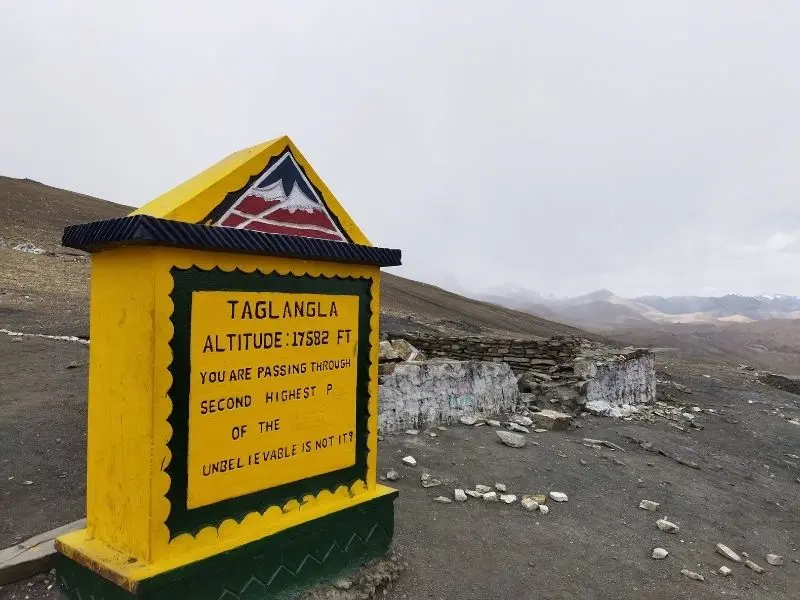
Ladakh is the ride people picture when they picture the Himalaya on a motorcycle. Even other operators say it plainly. One tour company calls Leh and Ladakh “a bucket list for most of the motorcycle riders,” and they’re not wrong. It’s earned the reputation.
This is the Great Himalayan Motorcycle Tour. Fourteen days, roughly £3,450, and it’s the grander, more cinematic of the two. Starting in the green of Kashmir, we drift along Dal Lake, then climb into a moonscape that doesn’t look like it belongs on this planet. We cross Tanglang La at 5,328 metres, one of the highest motorable passes on earth. The we ride the Nubra Valley, sand dunes with snow peaks behind them, and you finish with the kind of photos that make people at home go quiet.
What Ladakh gives you:
- The highest passes. Tanglang La, Khardung La country. Thin air, big bragging rights.
- Cultural breadth. Kashmir to Buddhist Ladakh in one trip. Two worlds, one ride.
- The scale. Everything is vast. The valleys are wide, the views run for miles, the sky is enormous.
- A touch more comfort. Leh is a proper town. There’s infrastructure, there are options, there’s a cold drink at the end.
The trade-off? You won’t be alone. Ladakh’s fame means traffic on the famous stretches in season. Other riders, the odd convoy, a tour bus where you didn’t want one. It’s still wild. It’s just no longer secret.
If this is your first big Himalayan ride, or the one you’ve promised yourself for a decade, Ladakh is the answer. You can read the full day-by-day in my Himalayan Kingdoms trip report, which is this route ridden and written up, warts and all.
Spiti: the one before the world catches up
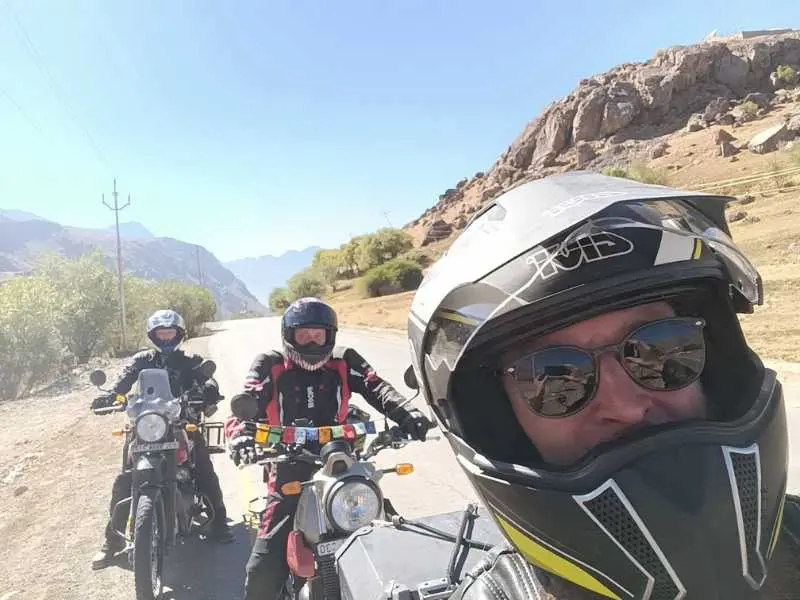
Now the other one.
The Great Spiti Valley Motorcycle Adventure is fourteen days, £3,450, capped at ten riders, and it runs in September only. There’s a reason it costs more and runs once a year. It’s harder to do well, and it’s worth doing right.
Spiti is a high cold desert between Tibet and the rest of India. It’s smaller than Ladakh, rawer, and far quieter. One operator I rate put it better than I could: “Spiti Valley is what Ladakh was twenty years ago. It will not stay this way. Riders who go now go before the world catches up.” That’s exactly the pitch. You’re getting the Himalaya with the volume turned down and nobody else in the frame.
What Spiti gives you:
- Emptiness. As another tour outfit warns, “you will ride for hours on roads where you don’t pass another vehicle.” On Spiti that’s not marketing. That’s Tuesday.
- The Pangi crux. My route takes in the Pangi and Sach Pass side, the genuinely technical, genuinely remote bit that most Spiti loops skip. This is the part that separates a sightseeing trip from an expedition.
- The villages. Hikkim with the world’s highest post office. Komic. Langza with its Buddha and its marine fossils sitting in the dirt at 4,400 metres. Key Monastery hanging off its hill.
- A real test. The technical riding is honest. As one Spiti operator says straight out, “the roads are narrow and winding, with steep drops on the side, and require a high level of skill and experience.” Believe them.
The trade-off? Less comfort, more commitment. Long days, rough surface, fewer bail-out options, real altitude with real consequences. You earn Spiti. That’s the point of it.
The full route, day by day, passes and waypoints and all, is in my Spiti expedition itinerary. If reading it makes you nervous, good. That’s the right instinct.

Spiti vs Ladakh, side by side
| Ladakh | Spiti | |
|---|---|---|
| The vibe | The icon, the bucket list | The secret, before it’s gone |
| Length | 14 days | 14 days |
| Price (land only) | From ~£3,250 | £3,450 |
| Group size | Up to 8 | Max 6 |
| Season | June to September | September only |
| Highest pass | Tanglang La, 5,328m | Kunzum La, 4,551m |
| Scenery | Vast, cinematic, varied | Stark, intimate, lunar |
| Culture | Kashmir + Buddhist Ladakh | Tibetan Buddhist cold desert |
| Crowds | Busy in season on the famous bits | Near-empty |
| Difficulty | Big passes, manageable surface | Technical, remote, the Pangi crux |
| Best for | Your first or definitive Himalaya | Your second, or the rider who wants raw |
Note the passes. People assume Spiti must be higher because it sounds tougher. It isn’t. Ladakh wins on altitude, Spiti wins on difficulty. Altitude and difficulty are not the same thing, and the surface under your wheels matters more than the number on the sign.
So which one should you ride?
Here’s how I’d actually steer you, the same as I would on the phone.
Ride Ladakh if it’s your first proper Himalayan tour, you want the highest passes and the postcard, you like a bit of cultural range, and you don’t mind sharing the famous roads. It’s the icon for a reason.
Ride Spiti if you’ve done a big mountain ride before, you want quiet over grand, you fancy something genuinely technical, and the phrase “what Ladakh was twenty years ago” makes you sit up. Go soon. The other operators aren’t lying about that part.
And if you’re sitting there thinking “both,” you’re my favourite kind of rider. Do Ladakh first for the scale, then come back for Spiti while it’s still empty. I’ll be running both.

Spiti vs Ladakh: frequently asked questions
Which is harder, Spiti or Ladakh?
Spiti is the harder ride. The roads are narrower, rougher and more remote, with fewer places to bail out, and my route adds the technical Pangi and Sach Pass section that most loops skip. Ladakh has higher passes but a more manageable surface and better infrastructure, which makes it the more forgiving of the two.
Which has the highest mountain pass?
Ladakh. You cross Tanglang La at 5,328 metres, one of the highest motorable passes on earth. Spiti’s high point is Kunzum La at 4,551 metres. Higher altitude does not mean harder riding, though, the surface matters more than the number on the sign.
Which is better for a first Himalayan motorcycle trip?
Ladakh, for most first-timers. It’s more accessible, has the iconic landscapes, more comfort in Leh, and a longer season from June to September. Spiti suits riders who already have a big mountain trip under their belt and want something rawer and quieter.
When is the best time to ride each?
Ladakh runs roughly June to September. My Spiti expedition runs in September only, when the high passes are reliably open and the valley is at its quietest.
Is Spiti cheaper than Ladakh?
As a general DIY trip, Spiti often works out cheaper. As guided tours, mine run the other way: the Spiti expedition is £3,450 against around £3,250 for Ladakh, because it’s capped at ten riders, runs once a year, and takes in the harder, more remote Pangi crux.
Ready when you are
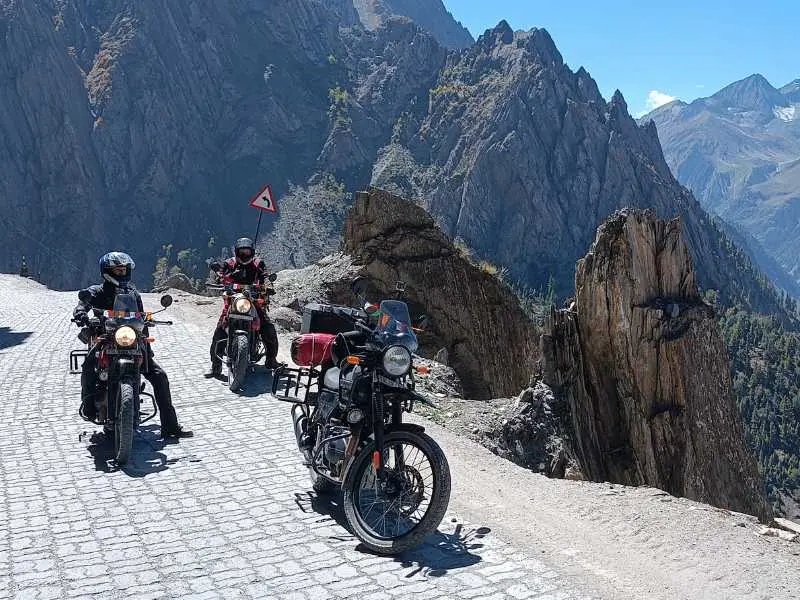
Either way, you’re getting a route I’ve ridden myself, a small group, and an operator who’ll tell you the truth before he takes your money.
Have a proper look at the two:
Still not sure? Message me. Tell me what you’re after and I’ll point you at the right one, even if the right one is “not yet, get a season of altitude under you first.” I’d rather you had the trip you wanted than the trip I sold you.
Worth reading:
- Find out why I’ve partnered with Scenic for my Himalayan motorcycle tours
- My review of the Himalayan 450 – the bikes we take on tour
- ADV RTW motorcycle adventure packling list